
Fences That Handle Prairie Wind Conditions
Fences in Lawrence and surrounding areas for privacy, security, and wind resistance on Kansas properties
Prairie winds place constant lateral pressure on fence structures, and expansive clay soils shift with moisture changes, creating conditions that cause poorly installed fences to lean or fail within a few seasons. Prochaska Construction LLC installs fencing in Lawrence and surrounding areas, using post-setting methods adapted to soil type and wind exposure, ensuring that vertical alignment holds regardless of weather patterns. You work with a licensed general contractor who tailors the installation approach to the material you select—cedar, pine, or composite—and the specific site conditions on your property.
The installation process includes evaluating soil composition, determining proper post depth and spacing, and selecting fasteners and bracing techniques that resist wind load. Cedar fencing is typically stained immediately to protect against moisture and UV exposure, while pine can be allowed to dry before finishing, depending on your maintenance preferences and timeline. Each fence is built as a custom project with material recommendations based on your priorities for appearance, longevity, and upkeep requirements.
Arrange a property consultation to review layout, material options, and installation methods for your fence project.
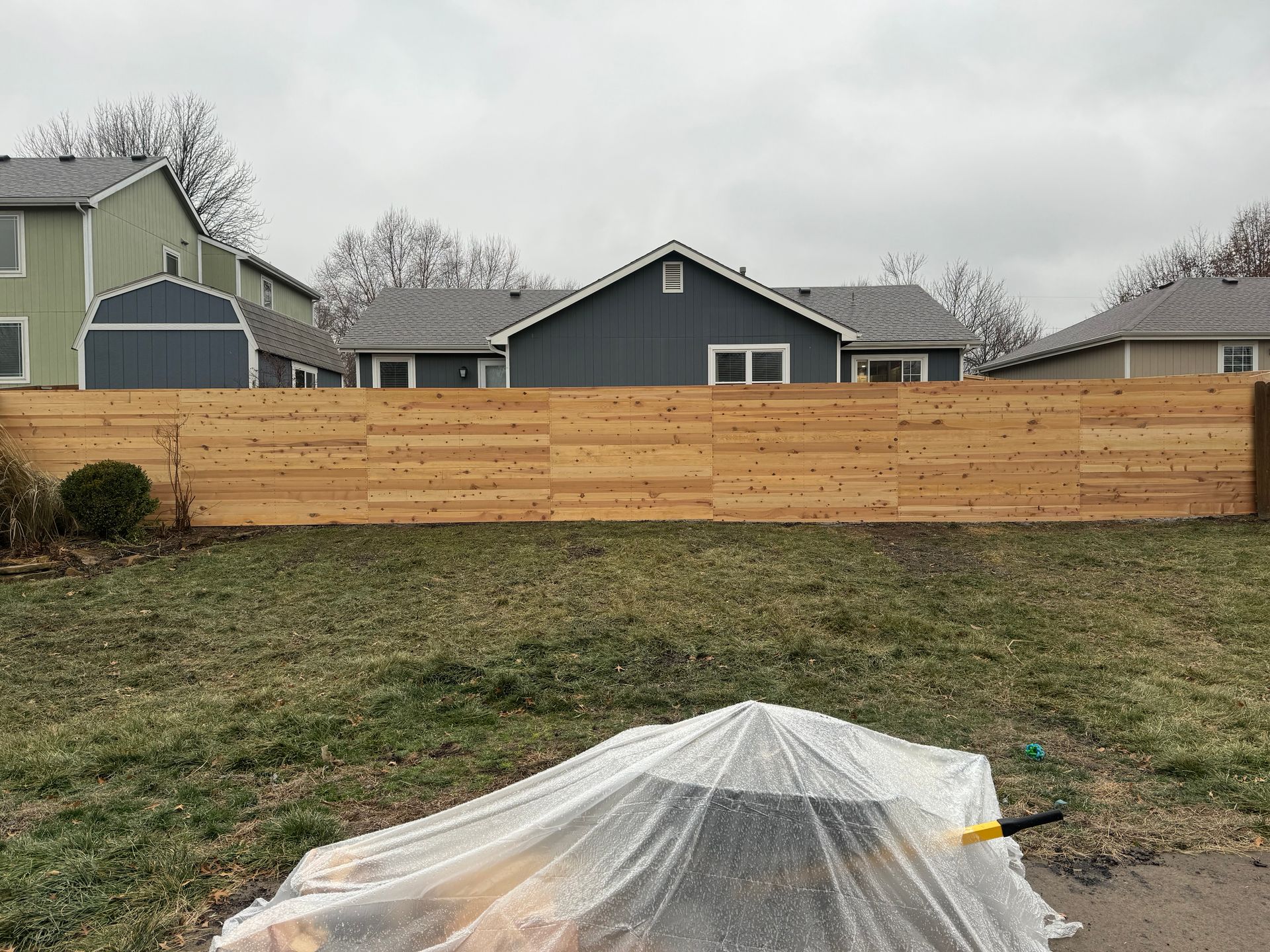
How Wind-Resistant Installation Prevents Common Failures
Fence installation begins with post placement that accounts for both wind direction and soil behavior, with deeper settings in clay-heavy areas where ground movement is more pronounced. Posts are set in concrete using methods that prevent water from pooling around the base, which causes rot in wood posts and undermines stability over time. Material selection affects not only appearance but also how the fence responds to wind—solid panel designs create more wind resistance than spaced pickets, requiring additional bracing or closer post spacing to maintain structural integrity.
After installation, your fence stands vertically without leaning, panels remain secure without gaps or warping, and gates operate smoothly without sagging. Prochaska Construction LLC uses a situational approach that adjusts techniques based on whether you're installing cedar that will be stained, pine that needs time to cure, or composite materials that require different fastening methods. These decisions affect both how the fence looks initially and how it weathers over the years.
Staining services are included when appropriate for the material type, with timing based on wood moisture content and weather conditions. Composite fencing eliminates staining requirements entirely but involves different installation considerations related to thermal expansion and fastener selection.
Answers Homeowners Need Before Installing Fencing
Fencing projects involve material choices and installation techniques that directly affect durability and appearance, particularly in areas with challenging wind and soil conditions.
How does Kansas clay soil affect fence installation?
Expansive clay swells when wet and shrinks when dry, causing ground movement that shifts posts unless they're set deep enough with proper concrete footings to anchor below the active soil zone.
What's the difference between cedar and pine fencing?
Cedar contains natural oils that resist rot and insects, making it suitable for immediate staining, while pine costs less but requires time to dry before finishing and needs regular maintenance to prevent decay.
How are posts installed to resist wind?
Posts are set in concrete at depths determined by fence height and wind exposure in Lawrence, with bracing techniques that distribute lateral forces across multiple posts rather than concentrating stress at single points.
When should staining happen after installation?
Cedar can be stained immediately, but pine should dry for several weeks to allow moisture to escape, which ensures the stain penetrates properly and doesn't trap water inside the wood.
Why does post spacing matter for panel fences?
Closer post spacing reduces the span each panel must cover, decreasing flex and stress during high winds, which prevents panels from pulling loose or breaking at connection points.
With more than ten years of licensed general contracting experience, Prochaska Construction LLC adapts every fence installation to the material type and site conditions that define your project. Request a project estimate to review layout, material specifications, and installation details for your property.